SEA OTTERS IN THE WILD
Sea Otter Safari Tours
Sea Otter Safari!
Tell me more about viewing Sea Otters in the Wild.
-
An all-inclusive Sea Otter Safari includes:
Accommodation
3 meals + snacks daily
Non-alcoholic beverages
Use of lodge amenities, including fully guided boat & independent exploration in small craft vessels
Daily safari tours & exploration
Welcome Basket
For all-inclusive guests - everything is included, as well as guided boats & kayaks for full day touring & transportation to/from lodge.
-
On an all-inclusive package, you’ll have some choices for how you’d like to observe the sea otters. Our captain can take you on a fully guided tour to observe otters in rafts or foraging as singles. Our captain has spent his life exploring Kyuquot Sound and has expertise in animal observations from a lifetime spent on the ocean.
You can also enjoy our fleet of pedal-drive Vibe kayaks outfitted with the Bixpy electric motors. Our kayaks are stable platforms ideal for photography buffs. The kayaks are equipped with Yak Attack waterproof boxes for all your photography gear. The electric Bixpy motors are very quiet making observations of wildlife very successful. You can use your telephoto lens for great photography or a drone camera for overhead video. With our fleet of kayaks, you’ll come home with great images of sea otters in the wild!
The kayaks can be used with complete independence or with the support ship accompanying you, depending on your desire for adventure. At all times, we are standing by ready to assist you on your adventures.
-
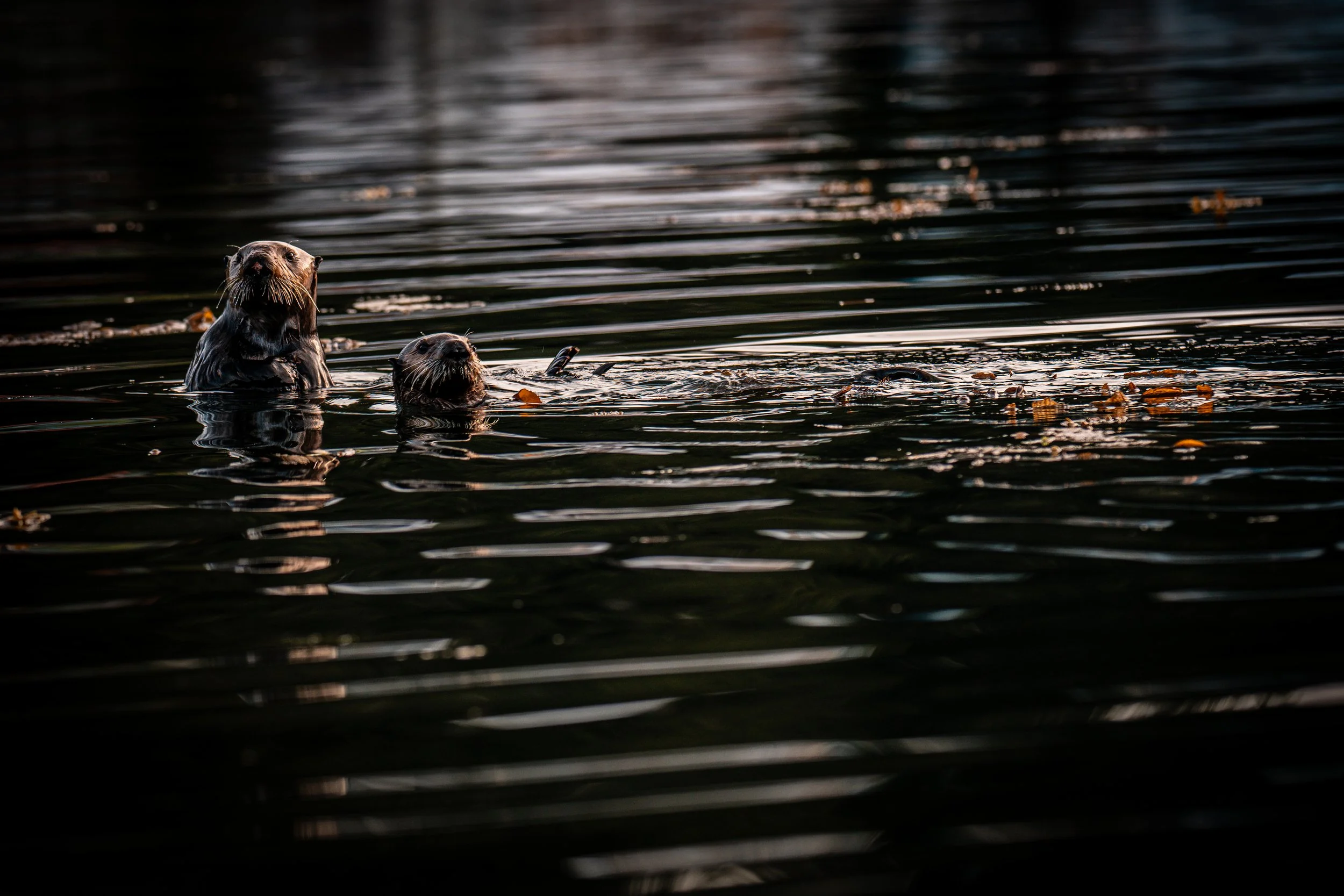
Sea Otters live all-over Kyuquot Sound. They can be found in big rafts of otters. The mature males tend to live in all-male bachelor rafts while the females prefer a more feminine cluster of otters.
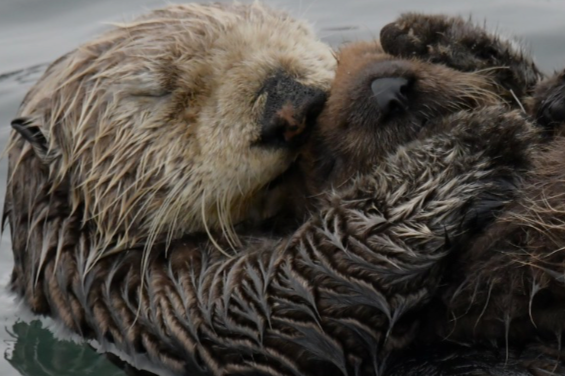
Typically in May & June mothers are caring for their newborn pups. Newborns don’t swim for the first 3 months so mothers can be seen in June and into July with their babes on their chests. Later in August, the mothers leave the rafts to teach their pups to dive and hunt. Late August & September is mating time as the pups become independent at about 6 months.
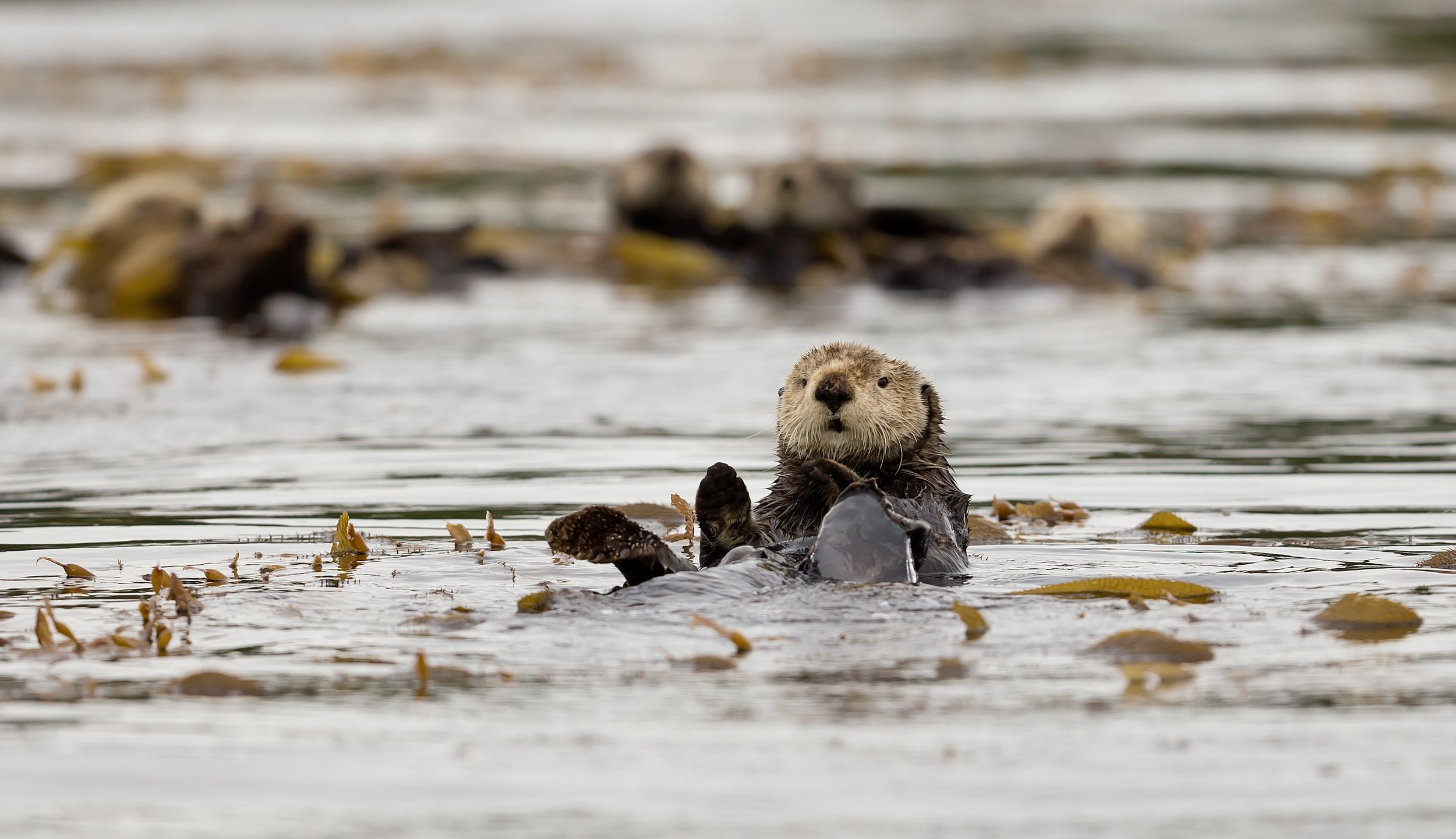
Every day you’ll see the otters feeding and grooming on the water surface. Otters can be seen and heard tapping with their rock tools on clams, oysters, sea urchins and more as each adult otter needs about 11,000 calories of food daily!
When not eating, otters are grooming. It’s ‘otterly’ adorable to see otters groom. They fluff and preen their dense fur with great purpose. Sea Otters have the world’s softest and dense fur designed to keep them warm. Grooming keeps small pockets of air between each hair that acts as insulation from the cold temperatures of the Pacific Ocean.
We take guests on tours of Kyuquot to see the otters in every aspect of their life, but often it’s easy to see otters right at the lodge too! The mothers bring their pups near the protected waters of our private island as it gives them safe shelter from the large predators who feast on sea otters. Orca whales and sea lions are reluctant to come in the protected shores, but even occasionally they can be observed from the lodge on the hunt for otters.
-
We offer both 3-day and 5-day all inclusive Sea Otter Safari holidays.
We recommend 5 days as it allows for more time to observe sea otters in the wild and opportunities to explore the beauty of Kyuquot. Kyuquot is such a spectacular place of remote wilderness that 5 days is still too short! It’s an adventure trip-of-a-lifetime.
Pricing:
5-day Safari - $4900 per person
3-day Safari - $3100 per person
Kyuquot
Home of the Sea Otter
-
Kyuquot is home to the largest population of sea otters in British Columbia. Scientific studies show that about 8000 sea otters live on the coast of Vancouver Island with about 95% located in Kyuquot Sound, according to renowned sea otter scientist Jane Watson from Vancouver Island University.
-
Reefs and rainforest is the simple answer.
But … the detailed answers are why Kyuquot is a world-class destination.
Without any direct road access, Kyuquot is one of the world’s largest and most protected areas of coastal wilderness. Nestled on the remote northwest coast of Vancouver Island, Kyuquot Sound is a collection of interlocking coastal inlets, bays and small islands. It’s very remote and surrounded by wonderful old growth rainforests, mountains and rocky rugged coastline.
The ocean is rich with marine life such as humpback whales, orcas, sea lions, seals, crustaceans, and fish species of all kinds. The rainforest is home to black bear, costal wolf, mountain lion, mule deer and elk. Bird-watching in Kyuquot is some of the world’s best for coastal birds such as raptors, oystercatchers, puffins, herons, and cormorants. Kyuquot has hummingbirds in great numbers, along with all kinds of coastal song birds and owls. All of these animals & more are regularly sighted. If you’re lucky, you may even catch a more rare sighting of an elephant seal or giant sunfish!
With very limited accommodation, making visitor numbers extremely low, the animals in Kyuquot will always outnumber the people.
The rocky islands and reefs of Kyuquot make boat navigation challenging for the inexperienced; yet thrilling for the seasoned adventurer. Even better is touring Kyuquot with our expert guides who know every reef to fish and beach to explore, making exploration of unknown places an adventure of a lifetime.
Sea Otter Lodge invites you to discover what makes Kyuquot so extraordinary — and why it deserves recognition among the world's great wilderness destinations.
-
Sea otters were reintroduced to British Columbia from 1979-1982 after years of extinction from overhunting during the fur trade era. Scientists translocated sea otters over a 4 year period from Alaska. The Bunsby Islands in Kyuquot Sound were choses because it was historically noted as the stronghold location for otters.
The archipelago of islands in the Bunsby area of Kyuquot provided a a dense network of reefs and rocks, alongside direct exposure to deep oceanic swells. This provided the transplanted sea otters with ideal foraging grounds and protection from severe coastal storms. Kyuquot is an area known for its abundance of marine life so otters had all the clams, abalone, crabs and sea urchins needed to thrive.
Their numbers grew rapidly. By the late 1980’s otters could be found in large rafts all over Kyuquot Sound. Today their population growth is more limited as larger predators now rely on sea otters for prey. Sea lions, orca whales and even coastal wolves are depend on sea otters as a food source.
Today about 95% of the sea otters living in British Columbia reside in Kyuquot. With almost 8000 otters in Kyuquot, according to renowned sea otter scientist Jane Watson, this means the density of sea otters is about 4 otters per km2 in Kyuquot. This means that sea otters all over Kyuquot, each and every day!
-
We recommend that guests come in the last two weeks of June because the mothers and pups are well-established. Mothers are feeding their pups and caring for them on their bellies as the pups are usually not yet swimming. But anytime is a good time, the otters live on the water surface and are easy to observe throughout the spring & summer months.
-
Sea otters are considered a keystone species meaning that an entire ecosystem depends on their survival and their species can also restore an entire ecosystem.
The reintroduction of sea otters in Kyuquot has transformed the ocean underneath the surface. Kelp forests have rebounded.
The healthy kelp forests provide critical food, shelter, and nursery habitats for hundreds of other marine species. Kelp forests also play an important role in the absorption of atmospheric carbon dioxide and help keep the Pacific Ocean healthy which contributes to climate warming.
Sea otters are champions for protecting our oceans!
-
Sea otters are easy to observe because when they are not diving for food, they spend all their time on the ocean surface.The majority of their day is spent eating and grooming.
An adult sea otter needs to consume almost 11,000 calories per day! Sea otters are efficient and intelligent foragers for food. They eat all kinds of shellfish using a favourite rock kept in a special pouch under their armpit. They keep a favourite rock, rather than any random rock, specially chosen for its sharpness as a tool and easy grip. Why? Because in one year, an adult sea otter will eat about 6000 lbs of shellfish and crabs. Everyday in Kyuquot otters can be seen and heard tapping with their rocks to open their next meal.
Grooming is also an essential part of sea otter life. Not for vanity, but instead for warmth. Sea otters have the most soft and dense fur of any animal on earth. They groom their fur to keep air pockets between each hair that act as an effective insulation against the cold temperatures of the Pacific Ocean. Sea otters are different than seals or whales. They have no blubber or fat to keep them warm. Instead they rely on their dense fur as a blanket of warmth.
Did you know that newborn sea otter pups are unsinkable? They are born with a special fur that doesn’t shed until they are ready to learn to swim at about 3-4 months old. This baby fur is called lanugo and it is so dense that it acts a personal floatation device keeping pups save while mothers dive for food.
Lastly, if you ever see a sea otter with purple teeth, then it means that sea otter really likes sea urchins!
If a sea otter eats a diet heavy in purple sea urchins, its bones and teeth can turn a bright purple color. This happens because a pigment called echinochrome from the urchins absorbs into their system.